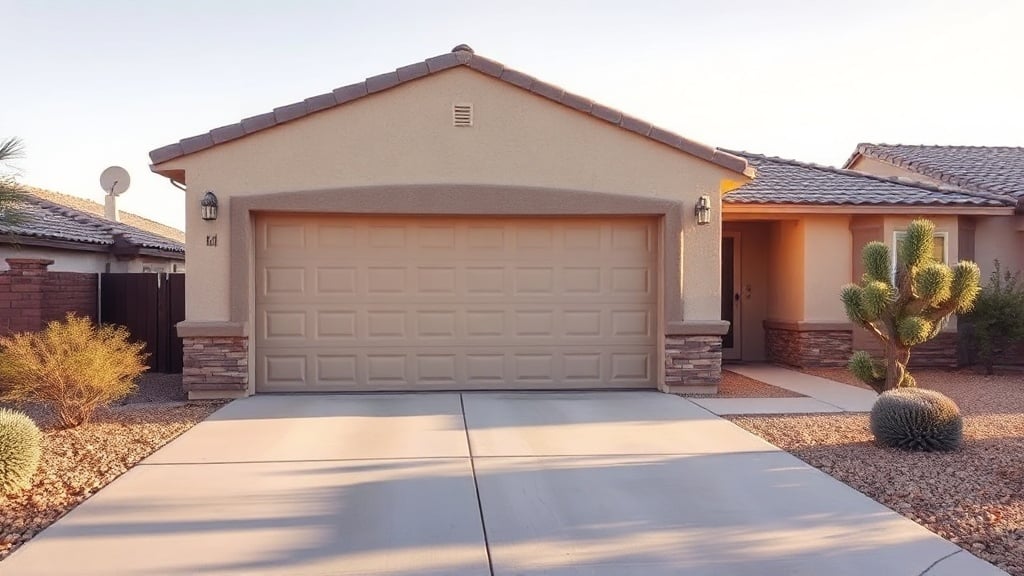
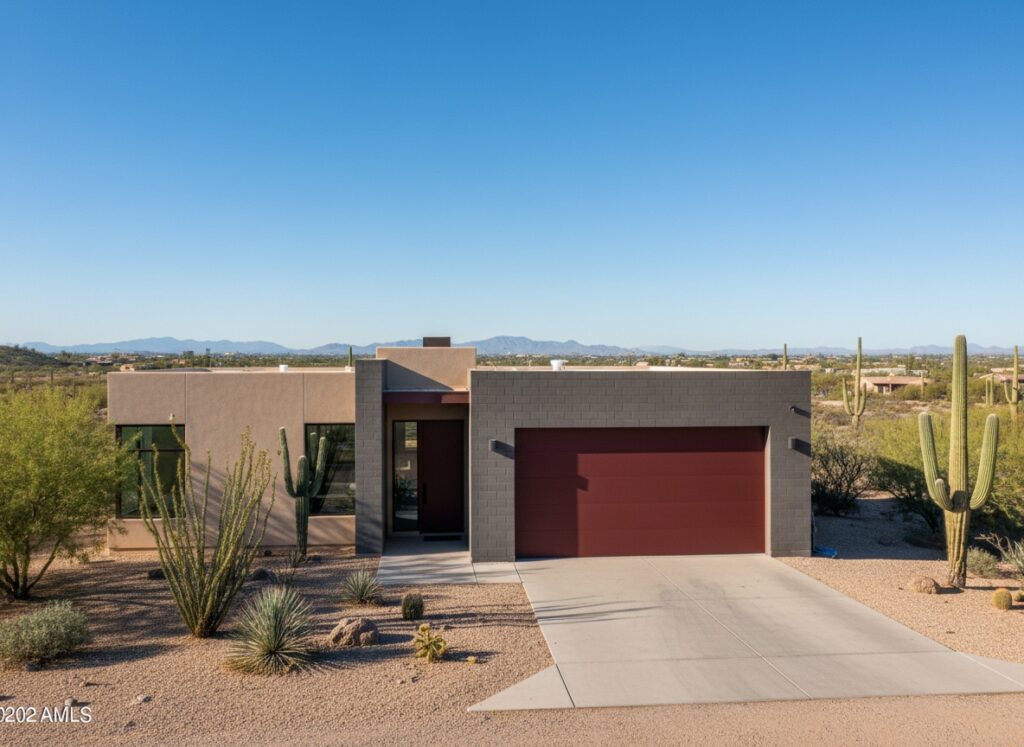
If you’ve lived in Scottsdale, AZ or anywhere in the Phoenix metro for more than one summer, you already know the weather here doesn’t mess around. Heat that bakes the asphalt, dust storms that roll in from nowhere, and monsoons that turn the driveway into a river. What you might not have considered is what all of that is quietly doing to your Garage Door Installation. Whether you’re weighing a new door or just trying to keep your current one running smoothly, understanding the weather connection is genuinely useful — not in a technical, overcomplicated way, but in a “your neighbor just told you something important” kind of way. Let’s get into it.
Why Scottsdale, AZ‘s Climate Is Unusually Hard on Garage Door Systems
We’re talking about a climate that swings between 115°F in June and near-freezing nights in January. Add in UV radiation that’s genuinely intense, haboobs — if you’ve seen the wall of dust that hits near the Loop 101 and Scottsdale Road, you know exactly what we mean — and humidity spikes during monsoon season, and you’ve got a combination that stresses every component of a garage door system year-round.
Wood warps. Metal expands and contracts. Rubber seals crack. Lubricants dry out faster. Springs lose tension. These aren’t scare tactics — they’re physics playing out on your door over time. The result is a door that starts making noise, moves slower, or one day just doesn’t open.
Heat: The Biggest Threat to Your Garage Door Installation in Scottsdale, AZ

Extreme heat is the number one weather-related factor we see damaging garage door components in Scottsdale, AZ and surrounding communities like Chandler, Fountain Hills, and Cave Creek. Here’s what summer heat actually does to a door system:
- Metal expansion: Steel tracks and springs expand in high heat, throwing off the alignment and tension calibration set during installation.
- Dried-out lubrication: Standard lubricants evaporate or thin out quickly above 100°F, leaving rollers and hinges grinding instead of gliding.
- Warped panels: Doors without proper insulation absorb heat and can bow over a few seasons — especially older models without a thermal break.
- Opener strain: Your opener’s motor works harder when the door moves sluggishly. That extra strain shortens its lifespan noticeably in hot climates.
- UV fading and seal degradation: Bottom seals, weatherstripping, and painted surfaces take a beating from direct sun, cracking and peeling far faster than in milder states.
A properly insulated door resists heat damage and pays for itself in more ways than one. Our detailed breakdown of garage door insulation benefits most Scottsdale, AZ homeowners overlook is worth a read if you want the full picture.
Monsoon Season: Dust, Moisture, and Hidden Damage
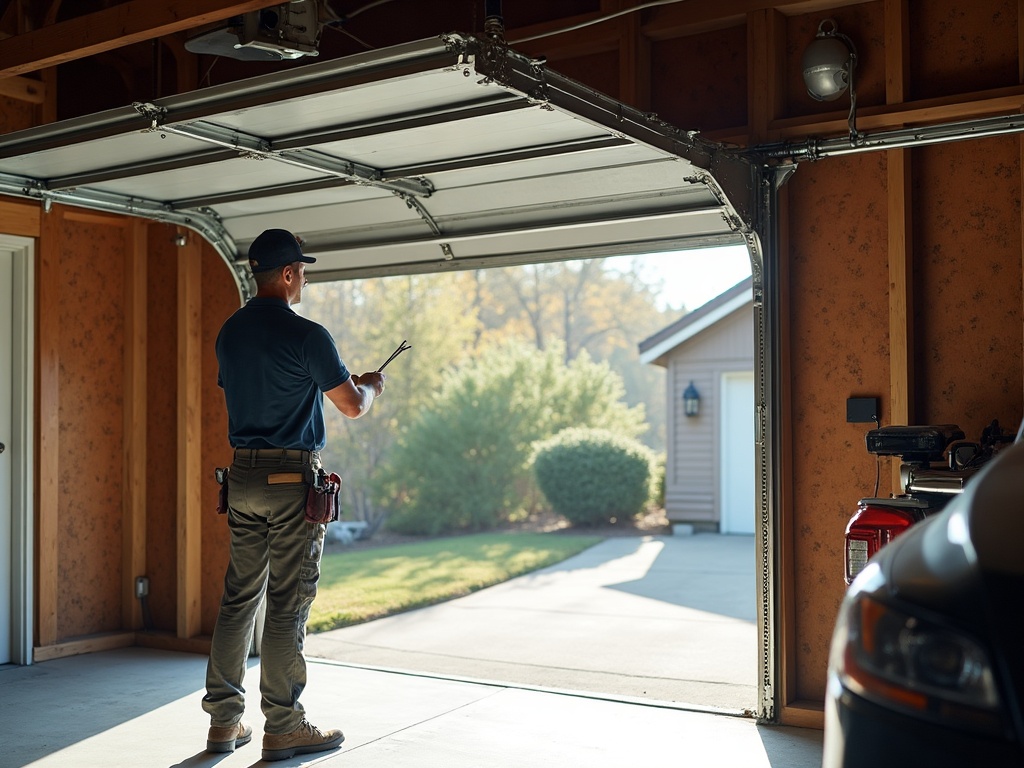
If you live near the McDowell Mountains in Scottsdale or out in the Cave Creek corridor, you’ve seen a monsoon roll in and coat everything in a thick layer of fine caliche dust. That dust gets into tracks, around rollers, into the opener’s motor vents — everywhere. Then the rain comes and turns it into a paste. Left unchecked, that paste becomes the friction that quietly wears your system down over months.
Moisture matters too. Even in a desert climate, relative humidity during monsoon season can spike above 50–60%. That’s enough to accelerate rust on springs and cables, especially if they’re already showing minor surface oxidation. A snapped torsion spring is not a DIY situation — it’s a safety emergency. Review the torsion spring safety guidelines from the International Door Association and then call a professional. If you hear a loud bang and the door stops working, please don’t touch the springs. Our garage door repair team handles exactly this kind of situation safely and quickly.
A haboob isn’t just a dramatic sky — it’s a maintenance event. After every major dust storm, a quick visual check of your tracks, bottom seal, and weatherstripping can prevent a costly repair call three months later.
— Red Crest Garage Doors field technician advice
How Seasonal Shifts Affect Timing and Calibration
Homeowners in Fountain Hills and North Scottsdale often notice something in late fall or early spring: the door slows down, reverses for no apparent reason, or hesitates on the way up. This isn’t always a mechanical failure. It’s often the auto-reverse sensitivity reacting to temperature-driven dimensional changes in the hardware.
Modern openers have limit and force settings that need seasonal recalibration — particularly after the brutal summer months. This is a standard part of what we cover during a routine garage door maintenance visit, and it’s one of the simplest ways to extend the life of every moving part on your system.
| Season / Condition | Common Issue | What We Check |
|---|---|---|
| Summer heat (June–Sept) | Slow movement, warped panels, dried-out rollers | Lubrication, panel condition, opener strain |
| Monsoon / dust storms | Dust-clogged tracks, rust on springs and cables | Track cleaning, spring and cable inspection |
| Cooler winter nights | Sluggish opener, limit-setting drift | Force/limit recalibration, weather seal check |
| High UV exposure (year-round) | Faded finish, cracked seals, brittle weatherstrip | Seal replacement, UV coating assessment |
When Weather Damage Means It’s Time for a New Door
Sometimes maintenance and targeted repairs buy you another five good years. Other times — especially with older doors that have no insulation, visible rust, multiple dented panels, or a worn-out bottom seal that lets dust pour in — it makes more financial sense to invest in a proper garage door installation than to keep patching something past its prime.
We’ve installed doors across the Phoenix metro, from Spanish-style homes off Pima Road in Scottsdale to modern desert contemporary builds near Tom’s Thumb Trailhead in North Scottsdale. A new door spec’d correctly for this climate should include:
- Steel or composite construction with a factory paint finish rated for desert UV exposure
- High R-value insulation — R-12 or better for the Phoenix heat corridor
- Powder-coated or galvanized hardware resistant to monsoon moisture
- A belt-drive or direct-drive opener — quieter and lower-maintenance than chain-drive in high-heat environments
- Heavy-duty bottom seal and weatherstripping designed to block fine-particle dust
And if you’ve ever been stuck with a door that won’t close at night — which is more common after weather events than most people realize — our guide on what it means when your garage door won’t close at night walks through the most likely causes and when it’s time to call in a pro.
Our Honest Advice: Don’t Wait for a Full Breakdown
We get it — the garage door works until it doesn’t. Life is busy, especially if you’re managing a family in Chandler or commuting from Cave Creek. But the calls that genuinely stress homeowners out most are the ones that happen at 7 AM when the car is stuck inside and someone needs to be at school in twenty minutes. That kind of emergency almost always has warning signs that showed up weeks earlier: a slow door, a grinding noise, a spring that looked a little rusty.
We’re local. We’re not a national franchise with a call center two time zones away. We serve Scottsdale, AZ and the surrounding Phoenix metro, and our techs know what this climate does to garage systems because they live here too. Our garage door opener service and full inspection visits are transparent, flat-rate where possible, and handled by actual garage door experts — not commission-driven salespeople.
You can check our service area page to confirm we cover your neighborhood, or head straight to our contact page to book a visit. No runaround, no mystery pricing.
The weather in Scottsdale, AZ is going to keep doing what it does. The best move is making sure your garage door is built and maintained to handle it — and that you’ve got a team you actually trust when something goes wrong.
Some content on this site is AI-assisted and may not reflect exact current details — please verify with Red Crest Garage Doors at (602) 898-8558. Learn more.