
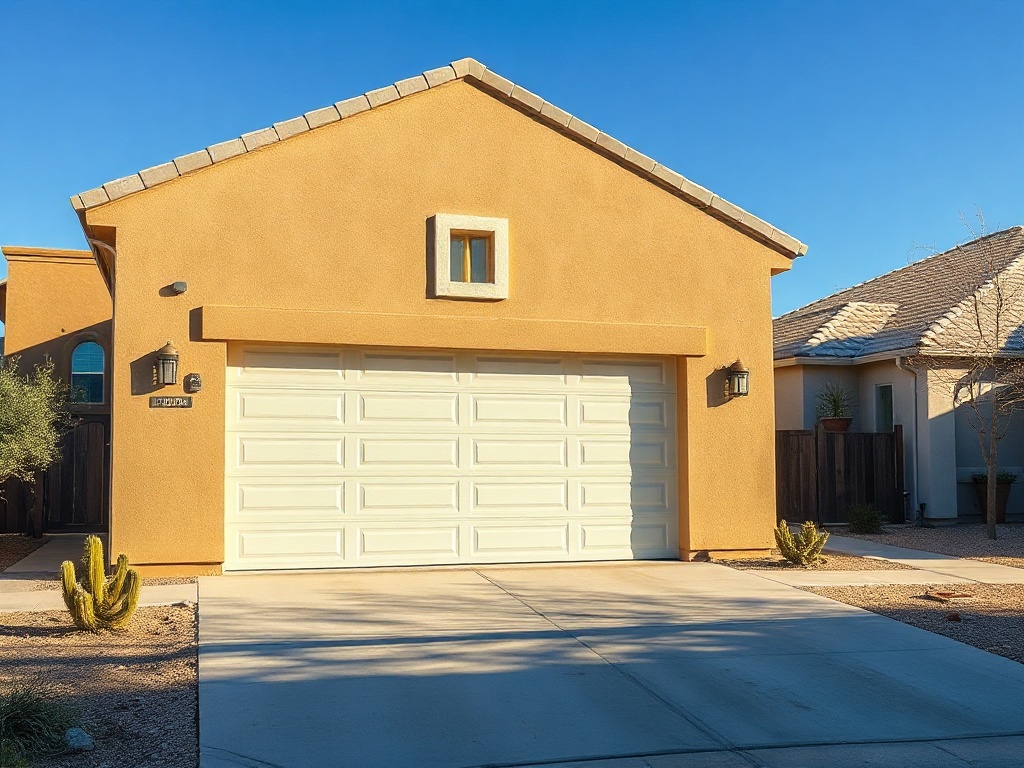
Hey, I’m Chris — and I’ve seen this exact situation play out more times than I can count across Avondale, AZ and the surrounding Phoenix metro. A homeowner notices their garage door dipping on one side, hesitating mid-travel, or shuddering like it’s deciding whether to cooperate. They figure it’s fine. It keeps working, right? Then one afternoon, the door jerks to a stop halfway down the track, the car is stuck inside, and suddenly it’s a Tuesday emergency. That’s exactly what Garage Door Opener Repair is designed to prevent — catching the warning signs before they turn into a full breakdown. Let’s talk about what that uneven movement is actually telling you.
What “Uneven” Actually Means — and Why It’s Never Normal
A properly tuned garage door should travel in one smooth, quiet line — straight up and straight down, with no side-to-side wobble, no stuttering, and no visible sag on either panel. When that motion looks choppy or lopsided, the door is communicating a mechanical problem. The issue isn’t always dramatic at first. Sometimes it’s just a subtle tilt you catch in the corner of your eye. But subtle is exactly how these things start.
Out here in the Phoenix metro — whether you’re in a Chandler subdivision, a hillside home near Fountain Hills, or a newer build off Pima Road in North Scottsdale — the heat, dust, and constant thermal expansion work against hardware faster than most homeowners realize. Your door cycles through temperature swings every single day. That stress accumulates, and it shows up as uneven movement long before anything actually breaks.
The Most Common Culprits Behind Garage Door Opener Repair Calls

There’s rarely a single cause — it’s usually one of a handful of issues, sometimes working together. Here’s what our technicians most often find when a homeowner contacts us about a door that’s moving wrong:
- Worn or unbalanced torsion springs: Springs handle the heavy lifting. When one weakens faster than the other — or breaks — the door tilts toward the weaker side. A broken spring under tension can also snap with significant force, making this a genuine safety concern.
- Frayed or slack cables: The lift cables run alongside each vertical track and keep the door even. A cable that’s starting to fray or has slipped its drum will cause that familiar lopsided travel.
- Bent or misaligned tracks: A track nudged even slightly out of vertical creates friction and resistance. The door fights it, and you hear and see the result.
- Worn rollers: Nylon and steel rollers degrade over time. Once they’re flat or cracked, they can’t guide the door smoothly, creating the stuttering, grinding feel.
- Opener force settings that are off: The opener may be compensating for mechanical drag by pushing harder on each cycle — straining itself to mask a deeper problem and shortening its own lifespan in the process.
A garage door that’s moving unevenly isn’t just annoying — it’s an early warning system. Catch it now, and you’re looking at a repair. Ignore it long enough, and you may be looking at a replacement.
How Fast Does an Uneven Door Become a Broken Door?

Faster than most people expect. The mechanics of a garage door are deeply interdependent — when one component is working harder than it should, it stresses the parts around it. A slightly worn cable puts extra load on the spring drum. A bent track forces the opener motor to work overtime. Before long, what started as a small imbalance cascades into a situation where the door won’t open at all, or worse, drops unexpectedly.
We respond to calls all over the Phoenix metro — from North Phoenix neighborhoods near Dynamite Boulevard to communities around McCormick Ranch in Scottsdale — and the stories are remarkably consistent: “It was doing this thing for a couple of weeks, and I kept meaning to call.” By the time we arrive, the repair list has grown considerably.
The honest truth is that routine garage door maintenance catches most of these problems before they compound. A quick inspection and lubrication cycle — springs, cables, rollers, tracks, and opener force calibration — takes under an hour and can buy you years of smooth, reliable operation.
Repair vs. Replace: A Quick Reference
One of the most common questions we get is: “Do I actually need to replace the whole door, or can this be fixed?” Most of the time, the answer is a repair — especially if you catch it early. Here’s a general breakdown:
| Symptom | Likely Fix | Typical Urgency |
|---|---|---|
| Slight tilt on one side | Spring or cable adjustment | Schedule soon |
| Grinding or stuttering | Roller replacement / track alignment | Schedule this week |
| Door reverses before closing | Opener sensor or limit adjustment | Repair ASAP |
| Door drops suddenly | Broken spring or snapped cable | Emergency — stop using it |
| Panels cracked or warped | Section replacement or new door | Cosmetic but plan ahead |
If the structural hardware is solid but the door is older and you’ve been thinking about an upgrade anyway, our garage door installation service covers everything from consultation to same-day setup. A new door does more than look good — it improves energy efficiency and security too. And if you haven’t looked into insulated doors yet, the garage door insulation benefits most homeowners overlook are worth a read before you decide.
What a Garage Door Opener Repair Service Call Looks Like With Us
We know you’ve probably dealt with a contractor before who gave you a vague quote over the phone and then arrived with a very different number. That’s not how we operate at Red Crest Garage Doors. When our tech shows up — whether you’re in Cave Creek, Fountain Hills, or anywhere else we serve across Avondale, AZ and AZ — here’s exactly what happens:
- Full inspection first. We look at the entire system — not just the obvious problem — because uneven movement usually has more than one contributor.
- Clear diagnosis, plain language. No jargon, no upsell pressure. We tell you what we found, what it means, and what it’ll cost to fix.
- Upfront pricing before any work begins. You approve it. We work. No surprise invoice at the end.
- Same-day service where possible. We carry common parts on the truck, so most repairs don’t require a second visit.
You can check our full list of covered areas on our service area page — we cover a wide stretch of the Phoenix metro and surrounding communities. And if you want to get ahead of problems before they call you, our garage door opener service includes a full mechanical review covering all the components that contribute to uneven movement.
For an authoritative look at why door balance matters and what the risks of a poorly maintained system really are, the U.S. Consumer Product Safety Commission’s garage door safety guidance is worth bookmarking — especially if you have kids or pets who spend time near the door.
Don’t Wait Until the Door Stops Working Entirely
The Phoenix metro heat doesn’t give mechanical systems a break, and neither does daily use. If your door is moving unevenly right now — even slightly — the window to fix it simply and affordably is open. Give it another few weeks of wear, and that window tends to close fast.
We’re local, we’re available, and we’re ready to take a look today. Call us or hit the button below to get on the schedule. One phone call, honest answers, and a door that actually works the way it should.
Some content on this site is AI-assisted and may not reflect exact current details — please verify with Red Crest Garage Doors at (602) 898-8558. Learn more.