

If you’ve ever watched your garage door wobble its way up like it’s auditioning for a carnival ride, you know that sinking feeling. One side rises, the other lags. There’s a shudder. Maybe a groan. Standing in your driveway wondering whether to call someone or just hope it fixes itself — that’s not a plan. Here at Red Crest Garage Doors, we see this across Carefree, AZ and the wider Phoenix metro every single week. The good news? Uneven movement is almost always fixable. Knowing what’s behind it helps you act fast, stay safe, and avoid a much bigger bill. And nine times out of ten, the root cause points straight to a need for professional Garage Door Spring Repair.
Why Garage Doors Move Unevenly in the First Place
A garage door is a carefully balanced system. Two springs — either a single torsion spring above the door or extension springs along the horizontal tracks — share the load equally. Cables thread through bottom brackets and wrap around drums in precise tension. When everything is calibrated correctly, the door glides straight and smooth. When something shifts, even slightly, the whole door tips, jerks, or drags on one side.
Here are the most common culprits we diagnose on service calls from Chandler up through Cave Creek and Fountain Hills:
- One spring weakened or broken: Springs lose tension gradually — or snap suddenly. Either way, one side of the door loses lift support and the imbalance shows up immediately.
- A frayed or slipped cable: Cables work with the springs to raise and lower your door. A loose cable on one side lets that corner sag.
- Worn or off-track rollers: Rollers that are cracked, seized, or have jumped the track create resistance on one side, causing that jerky, stuttering motion.
- Bent or misaligned track: A track that’s slightly out of vertical — often from an impact or heat expansion during our brutal AZ summers — creates friction that slows one side down.
- Uneven tension after a DIY adjustment: We see a lot of well-meaning homeowners who tried to adjust spring tension themselves and made the imbalance worse. Springs store enormous energy; the math has to be right.
The Garage Door Spring Repair Question: Fix It or Replace?
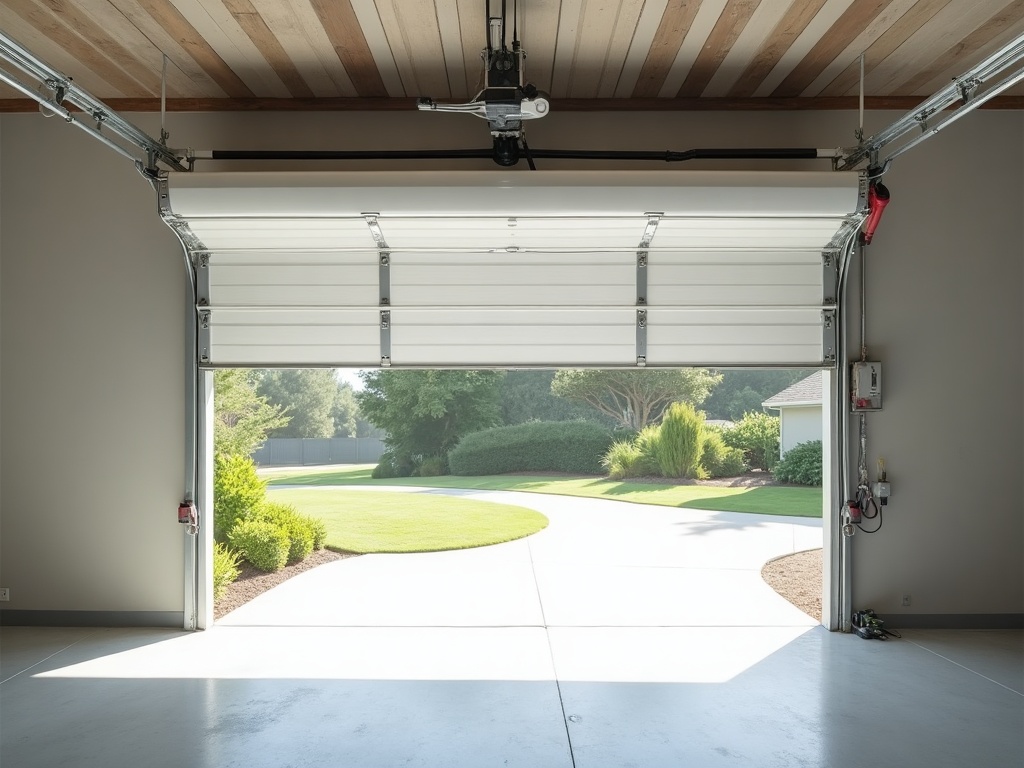
This is the question we hear most on calls from neighborhoods near McCormick Ranch in Scottsdale or down in Ahwatukee. The answer depends on the age of your components and how they failed. Here’s a quick breakdown to help you think it through before you even pick up the phone:
| Situation | Likely Solution | Urgency Level |
|---|---|---|
| One spring broken, door under 7 years old | Replace both springs (always in pairs) | High — stop using the door now |
| Springs intact but door slightly uneven | Balance adjustment + cable inspection | Medium — schedule within the week |
| Springs over 10 years old, door jerky | Proactive spring replacement | Medium — don’t wait for a snap |
| Rollers off-track, door grinding | Track realignment + roller replacement | High — risk of door falling |
| Cable frayed or snapped | Cable replacement + spring inspection | High — do not operate the door |
One thing we always recommend: if one spring is gone, replace both. They wear at the same rate, and the second one won’t be far behind. Paying for one service call instead of two just makes sense — especially when you’re already scheduling professional garage door repair to get the job done right.
Why Uneven Movement Is a Safety Issue, Not Just an Annoyance
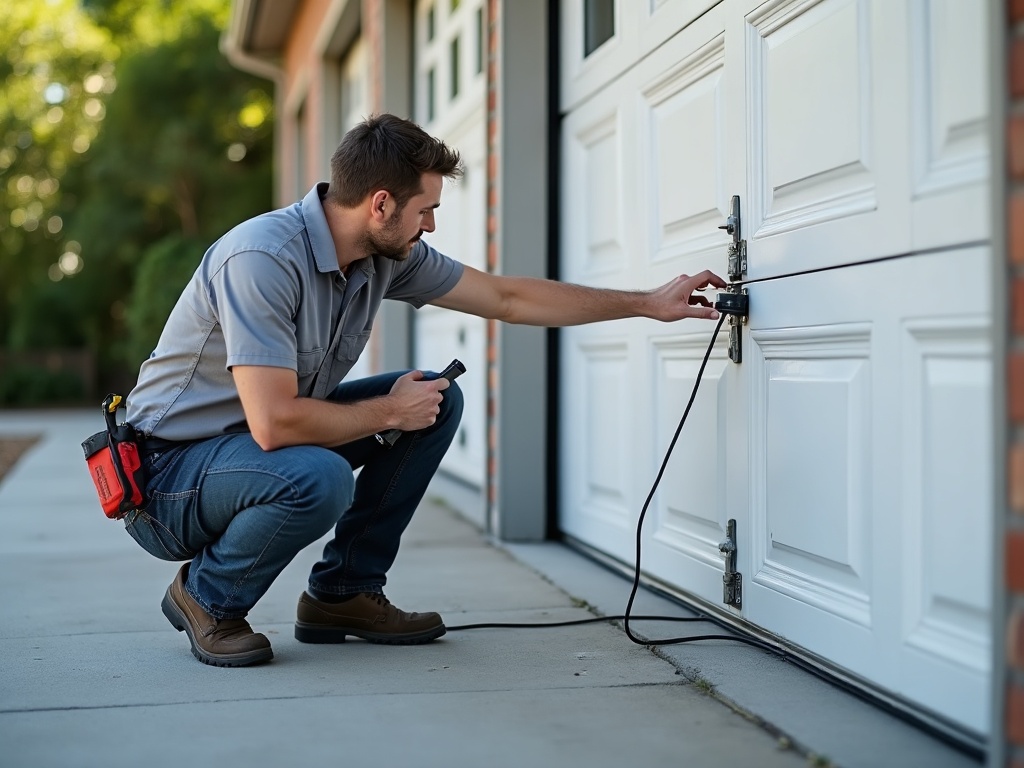
We want to be straight with you, because we genuinely care about the families we serve from North Phoenix down to Chandler. A garage door weighs between 150 and 400 pounds. The springs are what make it feel light. When a spring snaps — and they do snap, suddenly and loudly — that energy releases in a fraction of a second. A door operating on a broken or heavily stressed spring can drop, slam, or come off the track entirely.
Never try to manually adjust torsion springs yourself. The stored tension in those coils is enough to cause serious injury — this is the one repair where professional hands-on service isn’t just convenient, it’s non-negotiable.
The U.S. Consumer Product Safety Commission documents thousands of garage door-related injuries each year, a significant portion tied to spring and cable failures. If your door is moving unevenly, there is tension imbalance somewhere in that system. That’s the moment to call a pro — not after something gives way.
Not sure if your situation is urgent? Our guide on when your garage door won’t close at night covers overlapping warning signs that are worth reviewing alongside uneven movement.
What a Professional Service Call Actually Looks Like
A lot of Carefree, AZ homeowners have been burned by vague estimates or a tech who suddenly finds twelve things wrong. Here’s exactly what happens when Red Crest Garage Doors shows up at your door:
- Full visual inspection first. We look at springs, cables, drums, rollers, tracks, and the opener — before quoting anything.
- Honest diagnosis, plain language. We tell you what’s wrong, what caused it, and what happens if you leave it.
- Upfront pricing, no surprises. You hear the number before any work starts. Period.
- Same-day repair in most cases. We carry common spring sizes and hardware on the truck, so most Carefree, AZ and Scottsdale calls are resolved the same day.
- Balance test and safety check before we leave. We won’t drive away until that door runs straight, quiet, and smooth.
You can browse everything we offer — from opener service to full installation — on our garage door services page, or confirm we cover your neighborhood using our service area locator.
Routine Maintenance Prevents This Whole Situation
Springs rarely fail without warning. Squeaking, slow movement, visible rust, or a door that feels heavier than usual when you lift it manually — these are early flags. The problem is most of us don’t notice until the door is half-open and stuck. A scheduled routine maintenance visit catches deterioration early, lubricates moving parts, checks tension, and adds years to the system’s life. For homeowners in Fountain Hills or Cave Creek, where seasonal dust and temperature swings put extra stress on hardware, annual maintenance is genuinely worth the investment.
And if your door is older or you’re thinking about resale value, take a look at what garage door insulation benefits most homeowners in Carefree, AZ are overlooking — it affects long-term mechanical performance too, not just comfort.
Ready to Get That Door Moving the Right Way Again?
Whether you’re dealing with a full spring failure, a slow creeping imbalance, or just a nagging feeling that something isn’t right — don’t wait. Uneven movement almost never corrects itself, and the longer a stressed component runs under load, the more damage ripples through the rest of the system. We serve the entire Phoenix metro, including Scottsdale, Chandler, Cave Creek, and Fountain Hills, with same-day availability and honest flat-rate pricing. Give Red Crest Garage Doors a call at (602) 898-8558 and let’s get your door running straight again today.
Some content on this site is AI-assisted and may not reflect exact current details — please verify with Red Crest Garage Doors at (602) 898-8558. Learn more.