If you’ve ever hit your remote in the morning, watched your garage door crawl up about three feet, then grind to a stop, you already know how fast that goes from mildly annoying to full-on stressful. Whether you’re in Cashion, AZ heading out for an early commute or trying to get the kids to school on time, a stuck door is not a small problem. Understanding your Garage Door Opener Repair situation — what’s causing the hiccup and whether it’s a quick DIY tweak or a real safety issue — can save you time, money, and a whole lot of frustration. We’ve put together this guide so you know exactly what to look for and when to pick up the phone.
Why Garage Doors Get Stuck Halfway: The Most Common Culprits
A door that stops mid-travel isn’t just being dramatic. It’s usually telling you something specific. In the Phoenix metro heat — especially out in Scottsdale, Chandler, Cave Creek, and Fountain Hills where temperatures bake the asphalt for five months straight — components wear faster than the national average. Here are the most frequent reasons we see doors freeze up:
- Limit switch set too low or too high — The opener’s limit switch tells the motor how far to travel. If it’s off, the door stops early thinking it’s hit the floor or the ceiling. One of the easier fixes.
- Worn or broken torsion springs — Springs do the heavy lifting. A partially broken spring loses tension mid-cycle, leaving the door stranded. This is also one of the most dangerous DIY repairs out there — high-tension steel under load is no joke.
- Bent or obstructed tracks — A dented track section near Frank Lloyd Wright Blvd in North Scottsdale will jam rollers just as badly as one on a Chandler ranch home. Dirt, debris, and physical bends all create resistance.
- Frayed or snapped cables — Cables run alongside the springs and keep the door balanced. If one frays unevenly, the door tilts and binds before completing travel.
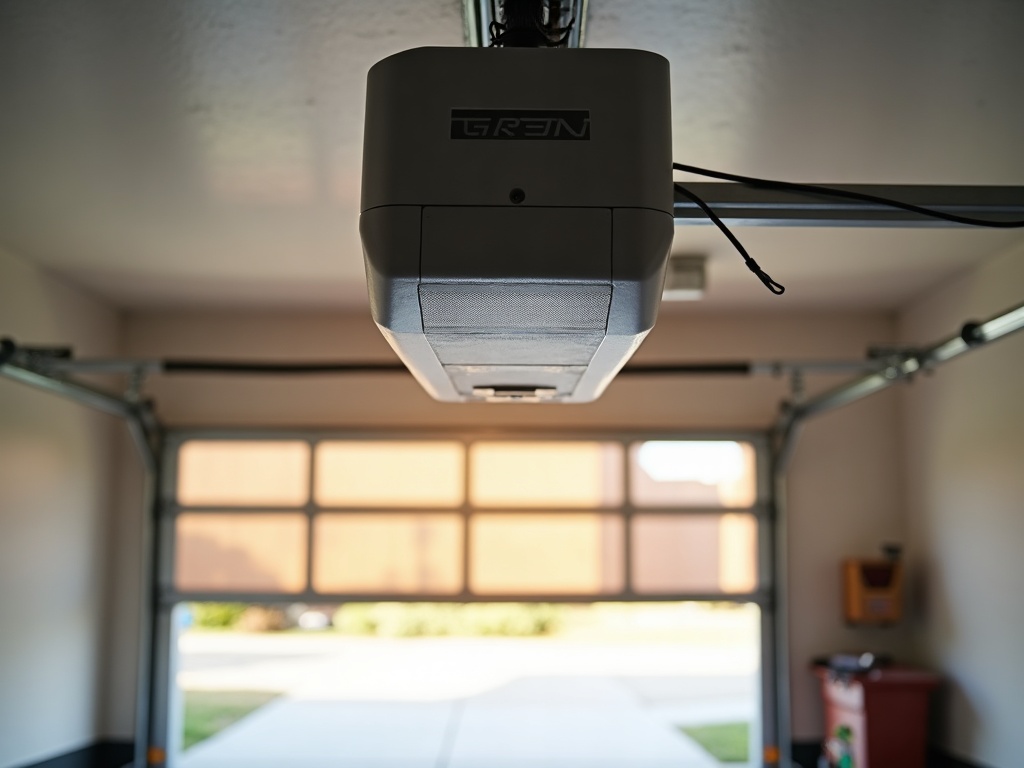
- Opener motor or logic board failure — Sometimes the issue isn’t mechanical at all. A faulty circuit board or worn motor cuts power mid-cycle. A proper garage door opener service diagnoses this quickly.
- Safety sensor misalignment — Those little eyes near the floor? Arizona sun can trigger false positives on east-facing doors, causing the opener to read a phantom obstruction and stop or reverse.
Warning Signs You Shouldn’t Ignore Before Calling for Garage Door Opener Repair
A door stopping halfway is rarely the first sign. Usually there’s a short story of smaller symptoms that got brushed off. Here’s what to watch for before the situation becomes an emergency:
- Grinding or scraping sounds that weren’t there six months ago
- Slow, labored movement — the door struggles where it used to coast
- Uneven gaps along the bottom seal when the door is closed
- Vibration in the opener unit during operation
- Remote or wall button working intermittently, but not consistently
- The door reverses on its own before fully closing
- Visible cable fraying or rust on springs
If two or more of these sound familiar, schedule a garage door tune-up before a small issue turns into a full parts replacement. Preventive maintenance costs a fraction of emergency repair — especially when a snapped spring is involved.
“A garage door that stops halfway is rarely a single problem — it’s usually a chain of small warning signs that got ignored. Catch it early, fix it cheap.”
When Is It Safe to Troubleshoot Yourself?
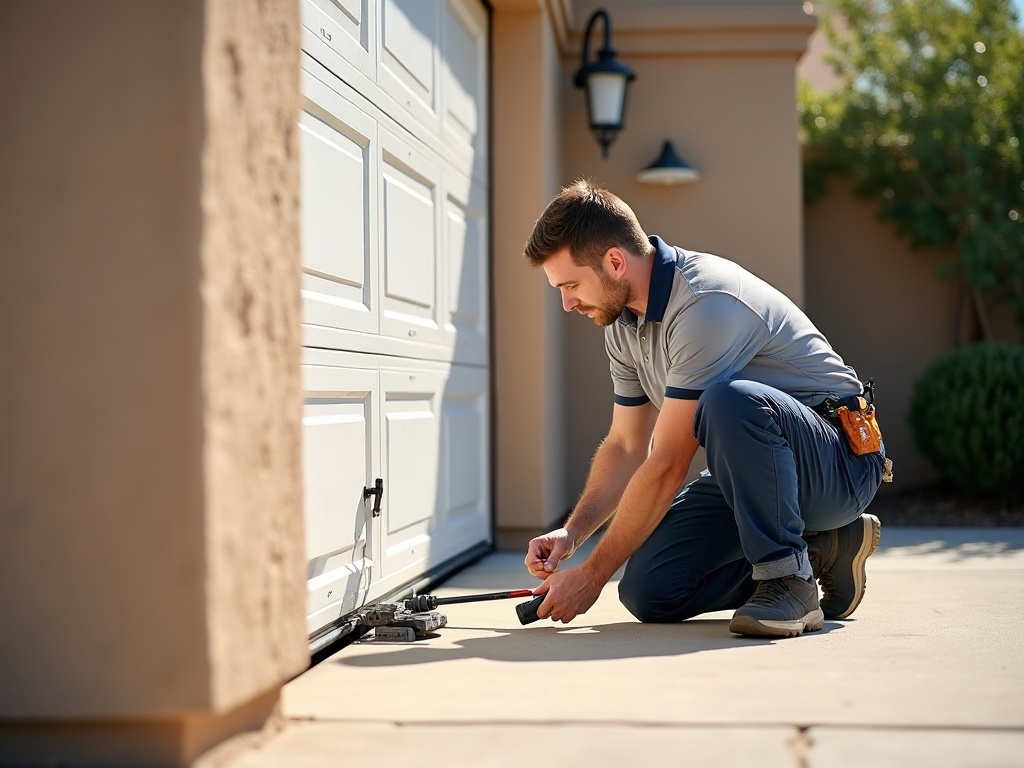
We’ll be straight with you, because that’s how we’d want someone to talk to us. Some things on a garage door are genuinely safe for a homeowner to check. Others absolutely are not.
| Task | DIY Safe? | Notes |
|---|---|---|
| Clean and lubricate tracks and rollers | ✅ Yes | Use a silicone-based spray, not WD-40 |
| Check and realign safety sensors | ✅ Yes | Look for blinking indicator lights |
| Adjust limit switch settings on opener | ⚠️ With caution | Consult your opener manual first |
| Replace torsion or extension springs | ???? No | High risk of serious injury — call a pro |
| Replace or restring cables | ???? No | Under tension; can cause severe injury |
| Diagnose opener logic board or motor | ???? No | Requires proper tools and experience |
Springs and cables are where we ask you to stop and call. According to the CDC’s guidelines on home injury prevention, high-tension mechanical systems in residential settings account for thousands of ER visits each year. A torsion spring under load stores enough energy to cause serious injury. It’s not worth the risk.
What a Professional Garage Door Opener Repair Diagnostic Actually Looks Like
When our technicians arrive — whether it’s a newer build near Kierland Commons in Scottsdale, a custom estate up in Cave Creek, or a family home off the 202 in Chandler — the process is methodical. We don’t just poke around and guess.
- We test the full travel cycle manually and with the remote
- We inspect spring tension, cable condition, and track alignment visually and by hand
- We check the opener’s force settings and limit switches
- We test sensor alignment and obstruction response
- We verify door balance — a properly balanced door holds itself at waist height without help
- We give you a clear, honest quote before we touch anything
If we spot additional issues — like insulation gaps spiking your energy bill or a door approaching end-of-life — we’ll tell you. Not to upsell, but because you deserve to make an informed decision. Our team covers insulation details for homeowners across Cashion, AZ in our post on garage door insulation benefits most homeowners overlook.
Local Knowledge Matters in Cashion, AZ and the AZ Heat
We’ve worked in enough zip codes around the Phoenix metro to know that conditions vary block by block. Extreme UV near Fountain Hills bleaches and weakens weatherstripping faster. Dust storms rolling off the desert near Cave Creek pack grit into rollers and tracks. The heat cycling in North Phoenix neighborhoods around Tatum Ranch causes metal components to expand and contract in ways that accelerate wear on cheaper hardware.
That regional knowledge changes how we diagnose and build each repair. A one-size-fits-all approach leads to repeat service calls. We spec the fix for AZ conditions — not a manufacturer’s test lab. You can also read our full guide on what it means when your garage door won’t close at night for more real-world troubleshooting context.
Fix It or Replace It? An Honest Answer
This is the question we get most often, and we respect that you’re trying not to get talked into a $2,000 door when an $80 spring is all you need. Here’s our honest rule of thumb:
- Under 10 years old: Almost always repair first. Parts are available, structure is sound.
- 10–15 years old: Depends on repair cost versus door condition. We’ll show you the math.
- 15+ years with multiple issues: Replacement often makes more financial sense, especially if you’re planning to sell.
- Visible structural damage or major panel warping: A new garage door installation can genuinely increase your home’s value.
We won’t push you in either direction. Our job is to give you the full picture and let you decide. See our garage door repair services page for a full breakdown of what we handle, or visit our FAQs if you have a specific question before calling.
Ready to Get Your Door Moving Again?
Whether you’re dealing with a door stranded at mid-cycle, hearing sounds you can’t explain, or just want a professional set of eyes before something breaks — we’re ready. Red Crest Garage Doors serves homeowners across Cashion, AZ, Scottsdale, Chandler, Cave Creek, Fountain Hills, and the wider AZ metro. Same-day appointments are available, and we always give you a clear, upfront price before any work begins. No surprises, no pressure.
Some content on this site is AI-assisted and may not reflect exact current details — please verify with Red Crest Garage Doors at (602) 898-8558. Learn more.