
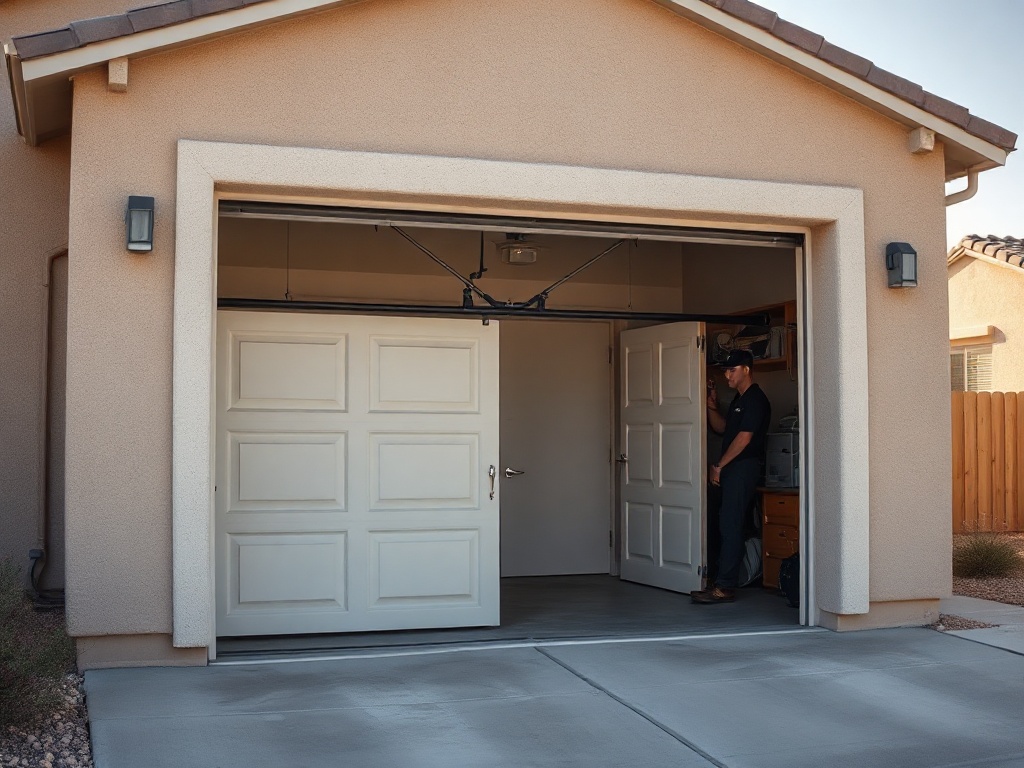
Hey, I’m Chris — and if you’re reading this because your garage door just did that infuriating open-then-reverse trick, I get it. It feels minor until it absolutely isn’t. Here at Red Crest Garage Doors, we see this exact scenario almost every week across Buckeye, AZ and the surrounding Phoenix metro — and nine times out of ten, what looks like a weird quirk is actually your door telling you it needs Garage Door Spring Repair. Catching it early can mean the difference between a straightforward service call and a much more expensive fix. Let’s walk through exactly what’s happening and why acting now matters.
Why Your Garage Door Reverses Right After Opening
When your door lifts a few feet and then retreats back down like it changed its mind, it’s not random. Your door’s safety system is detecting resistance it shouldn’t feel — and reversing to protect itself (and you). The most common culprit? Worn, unbalanced, or broken springs. Springs carry virtually all the door’s weight; when they start to fail, the opener motor senses the extra load and reverses before it burns itself out.
Other causes include misaligned safety sensors near the floor, a bent track, or cable tension issues. But in our experience serving homeowners from Chandler up through Cave Creek and Fountain Hills, failing springs are behind this symptom more than anything else. And here’s the uncomfortable truth: a spring that’s struggling today can snap without warning tomorrow.
The Real Cost of Delaying Garage Door Spring Repair
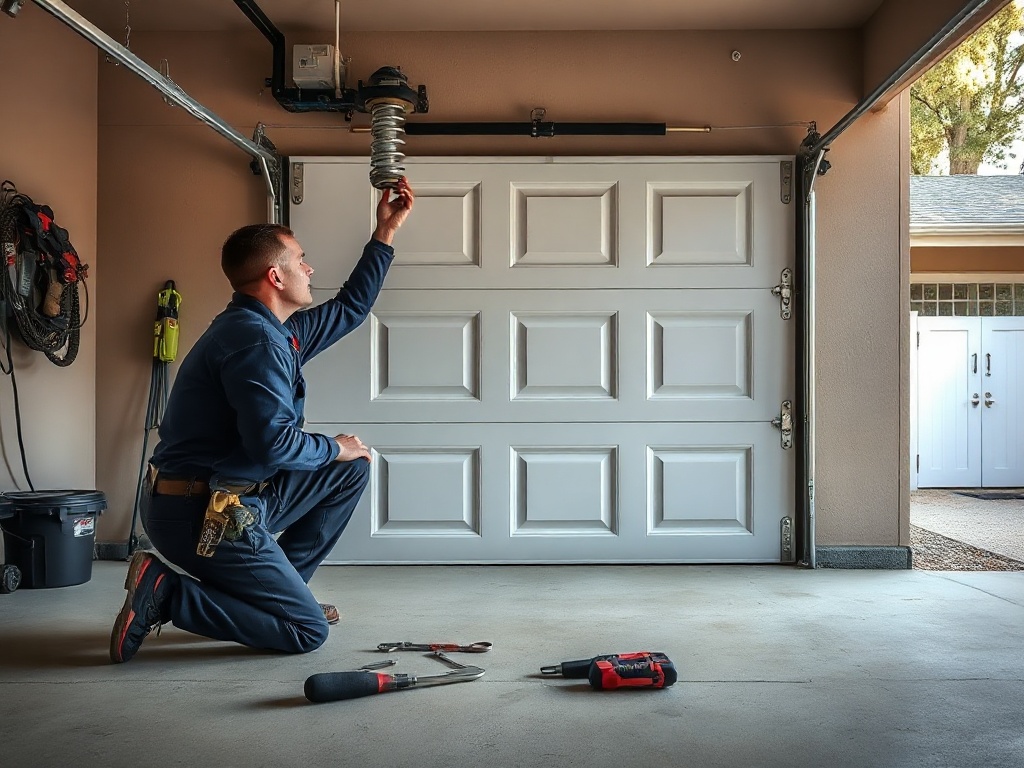
We understand the instinct to wait and see. Life is busy — especially when you’re juggling work, family, and everything else that comes with owning a home in the Phoenix metro. But letting a spring issue drag on tends to compound the bill, not shrink it. Here’s what we typically see happen when homeowners delay:
- Opener motor damage — The motor strains every time it fights a bad spring. Replace a spring now, or replace a spring and an opener later.
- Cable failure — Springs and cables work together. A broken spring puts sudden, uneven stress on cables that weren’t designed to compensate alone.
- Track warping — A door that fights itself on the way up or down puts lateral pressure on the tracks. Over time, that bends them.
- Panel damage — A door that drops suddenly when a spring snaps can crack panels, bend the bottom bracket, or worse.
- Safety risk — A high-tension torsion spring snapping is genuinely dangerous. This is not a DIY situation.
A single spring replacement is almost always cheaper than replacing the spring plus the opener motor plus the cables. Call a technician before one problem becomes three.
What Our Garage Door Spring Repair Diagnostic Actually Covers

When one of our technicians arrives — whether you’re in a home off Pima Road in North Scottsdale, near Desert Ridge Marketplace in Phoenix, or out in Fountain Hills — they’re not just eyeballing the obvious. A proper diagnostic covers the full system. Here’s what that looks like:
| Component | What We Check | Why It Matters |
|---|---|---|
| Torsion / Extension Springs | Tension, coil separation, rust, cycle count | Root cause of most reversal issues |
| Safety Sensors | Alignment, cleanliness, signal strength | Misalignment triggers false reversal |
| Cables | Fraying, anchor tension, drum seating | Cable snap = sudden door drop |
| Tracks & Rollers | Alignment, wear, lubrication | Binding tracks increase motor load |
| Opener Motor | Force settings, drive system, age | Delayed diagnosis can burn out the motor |
| Weatherstripping & Panels | Seals, cracks, bottom bar condition | Affects energy efficiency and curb appeal |
We cover a similar checklist in our garage door inspection checklist that protects long-term performance — worth a read before your appointment so you know exactly what questions to ask.
Why Buckeye, AZ Homes Need Proactive Spring Service
AZ heat is brutal on garage hardware in ways homeowners from cooler climates don’t always anticipate. Metal expands and contracts with temperature swings — and here in Buckeye, AZ, those swings are extreme. Springs that might last 10,000–15,000 cycles in a moderate climate often show wear much sooner in Phoenix metro conditions. The OSHA guidance on high-tension mechanical hazards makes clear why spring maintenance is not something to improvise — stored energy in a torsion spring is significant, and a snap without warning is a genuine injury risk.
Beyond mechanical wear, desert dust and the humidity spikes that come with monsoon season accelerate rust and coil fatigue. Homeowners near Cave Creek Road in Scottsdale or out toward Fountain Hills — where homes sit in more exposed desert settings — often see this faster than neighborhoods with more shade and landscaping buffering.
The good news? Scheduled routine garage door maintenance is one of the most cost-effective investments you can make as a homeowner. We catch small spring fatigue before it becomes an emergency — meaning you choose the timing, not your door.
Signs Your Springs Are the Problem (Not the Opener)
- Door opens 6–12 inches and reverses — classic spring resistance signal
- Door feels unusually heavy when you lift it manually with the opener disconnected
- Loud bang from the garage, especially at night — often means a spring just snapped
- Door hangs crooked or one side drops lower than the other
- Visible gap in the spring coil — that’s a break; do not operate the door
- Grinding or squeaking even after lubricating the tracks and rollers
If you’re checking any of these boxes, the safest move is to leave the door in place and call a professional. High-tension springs store enormous energy — a DIY repair attempt without the right tools and training can cause serious injury. We’ve seen it. It’s not worth it.
Transparent Pricing — You Know the Number Before We Start
One of the biggest frustrations with home repair is showing up to a surprise invoice. That’s not how we operate. Before any work begins, we explain exactly what needs to happen, why, and what it costs. Our garage door repair service includes a full diagnosis so you understand every line item — no pressure, no bait-and-switch.
Most spring replacements — especially if caught before they fully snap — are resolved in a single visit. We stock common spring sizes for both torsion and extension setups on our service vehicles, so we’re not leaving you without a working door while we wait on parts.
If your opener is also struggling, our garage door opener service team can handle both in one trip — saving you time and typically saving money compared to two separate visits.
Serving the Whole Phoenix Metro — From Chandler to Cave Creek
We’re local. Our technicians live and work in this community — some near Kierland Commons in Scottsdale, others closer to the 101 and Bell Road corridor in North Phoenix. When you call Red Crest Garage Doors, you’re getting someone who knows the neighborhoods, the roads, and the kinds of homes here — not a call center routing you to whoever’s available across three states.
We serve the full Buckeye, AZ metro area including Scottsdale, Chandler, Cave Creek, and Fountain Hills. Check our service area page to confirm we cover your zip code — though if you’re in the Phoenix metro, odds are very good we do.
Your garage door handles thousands of cycles a year. It’s the largest moving part of your home and — especially in Buckeye, AZ — it takes a beating. Don’t let a repair that costs a few hundred dollars today turn into a full replacement because the timing wasn’t convenient. We’re here, we’re local, and we’ll give you a straight answer the moment we pull up. — Chris
Some content on this site is AI-assisted and may not reflect exact current details — please verify with Red Crest Garage Doors at (602) 898-8558. Learn more.