Hey, I’m Chris from Red Crest Garage Doors — and if you’re reading this, your garage door probably just scared the daylights out of you. A door that suddenly slams shut is one of those moments that feels minor until it really, really isn’t. Whether you’re in a neighborhood off Scottsdale Road, near Kierland Commons in Scottsdale, or out in Fountain Hills, a slamming garage door isn’t just annoying — it’s a safety hazard. When homeowners search for Garage Door Repair Near Me, this is exactly the kind of situation they’re dealing with. So let’s talk honestly about what’s going on, what’s causing it, and when you genuinely need to put down the YouTube tutorial and call a professional.
What Does It Mean When a Garage Door Slams Shut?
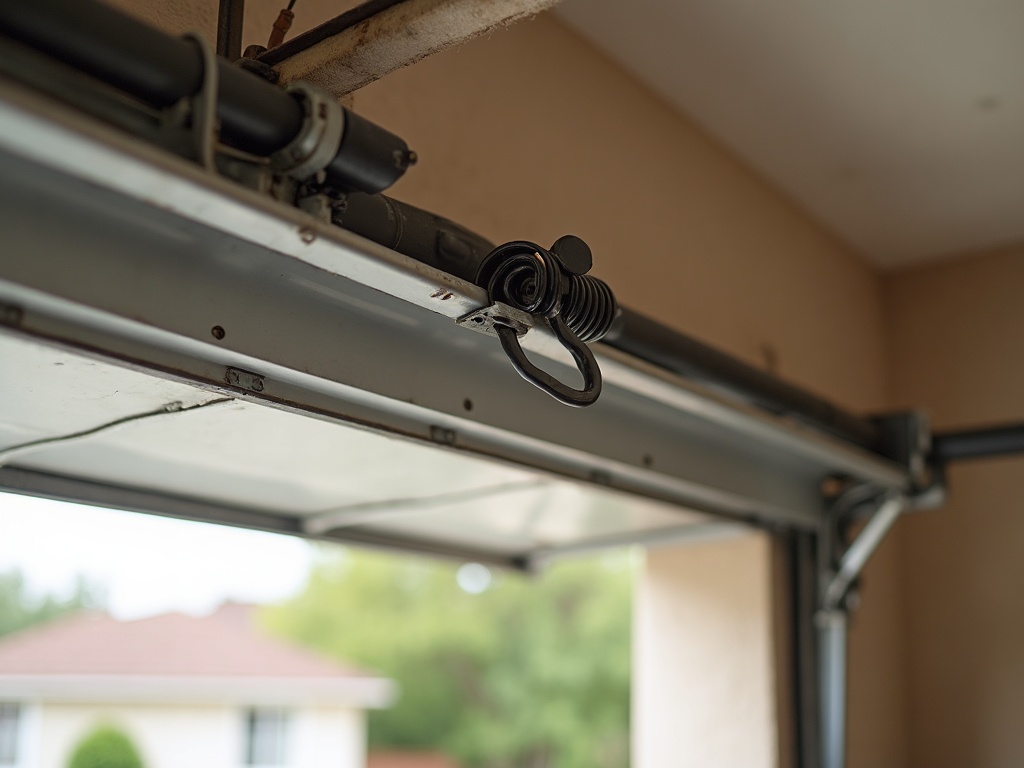
A garage door that drops hard or slams closed is almost always a tension problem. The system that controls how your door lowers — springs, cables, rollers, and the opener itself — is calibrated to work together. When any one of those components wears out or fails, the counterbalance breaks down. Instead of easing the door down gently, the system loses control and the door drops fast.
Here in the Phoenix metro, extreme heat accelerates this wear significantly. Temperatures above 110°F in summer — which are completely normal in Chandler, North Phoenix, and Cave Creek — cause metal components to expand, lubrication to thin out, and springs to fatigue faster than in cooler climates. A door that was fine last October might start slamming by July.
Top Warning Signs You Shouldn’t Ignore
Before a door slams, it usually gives you a few warnings. Most homeowners miss them — or notice them and hope the problem goes away. It doesn’t. Here’s what to watch for:
- The door moves unevenly or jerks — one side dips lower than the other during operation, which usually means a spring or cable on one side is weakening.
- Loud banging or popping sounds — a sharp bang from the garage often means a torsion spring just snapped. Don’t try to operate the door after this.
- The door reverses unexpectedly — modern openers have safety sensors, but a door that keeps reversing mid-close is signaling a resistance problem.
- Sluggish or slow opening — springs assist the opener in lifting the door’s weight. A worn spring makes the opener strain, shortening its lifespan too.
- Visible gaps in the spring coil — if you look at your torsion spring above the door and see a visible gap or separation in the coil, it’s already broken or about to break.
- The door won’t stay up when manually lifted — this is a classic broken spring test. If it falls back down, the counterbalance is gone.
A garage door weighs between 150 and 400 pounds. Without functioning springs and cables, gravity does exactly what you’d expect — fast and without warning.
— Chris, Red Crest Garage Doors
Is a Slamming Garage Door Dangerous?
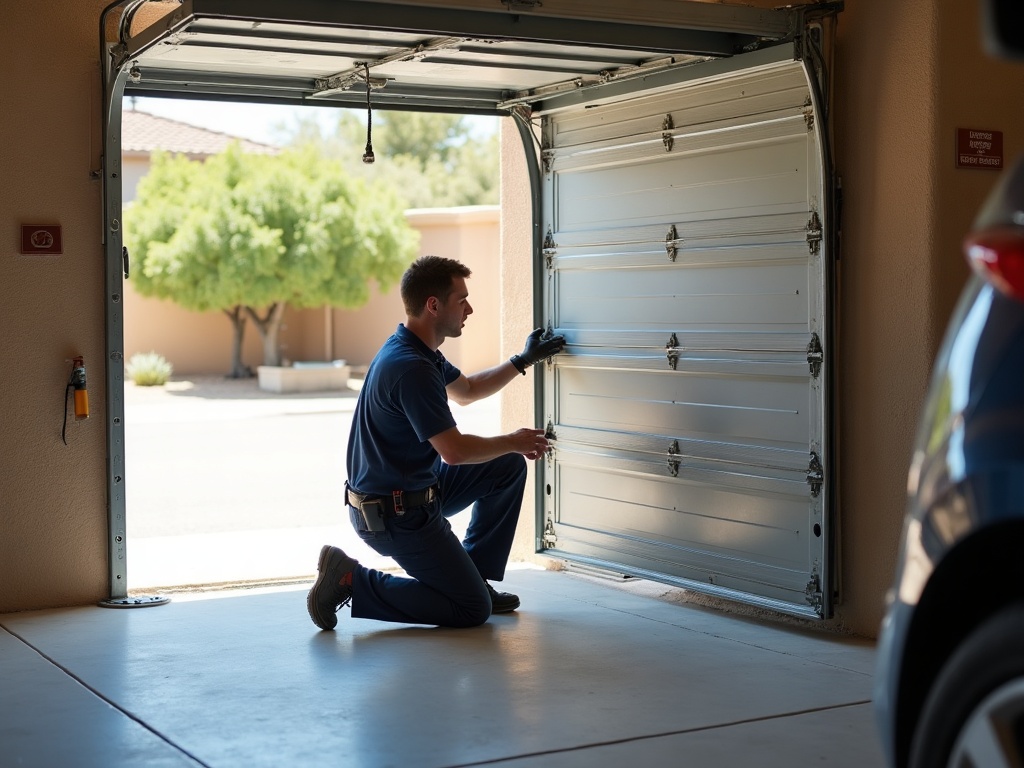
Short answer: yes, absolutely. This is not a “wait and see” situation. A door that slams can injure a person, damage a vehicle, or destroy the door itself. Torsion springs in particular store an enormous amount of mechanical energy — when they snap, metal fragments can fly across a garage at high speed. This is why safety authorities consistently flag garage door springs as one of the most hazardous DIY repairs a homeowner can attempt. We’ve seen the aftermath when that goes wrong, and it’s not worth it.
If your door has already slammed once, treat it as a warning shot. Stop using it manually. Use the emergency release carefully if you need to get a car out, but don’t keep cycling the opener and hoping it holds. Call us — we offer same-day garage door repair across the Phoenix metro, and we’ll tell you exactly what’s wrong and what it’ll cost before we touch anything.
Common Causes: A Quick Comparison
Not every slam has the same root cause, and the fix varies significantly depending on what’s actually broken. Here’s a quick breakdown:
| Cause | What You’ll Notice | DIY-Safe? | Typical Fix |
|---|---|---|---|
| Broken torsion spring | Loud bang, door won’t lift | No — high risk | Professional garage spring replacement |
| Snapped cable | Door tilts, hangs lopsided | No — under tension | Cable replacement by a technician |
| Worn rollers | Grinding, jerky movement | Partially — rollers only | Roller replacement, track alignment |
| Opener issue | Inconsistent speed, reversal | Sometimes | Opener adjustment or replacement |
| Limit switch miscalibration | Door slams at bottom | Yes — minor adjustment | Recalibrate close-limit setting |
As you can see, most of the causes that produce a genuinely dangerous slam — broken springs and snapped cables — are not safe for homeowners to handle. The limit switch is the one exception where a careful adjustment is reasonable, but if that doesn’t fix the slam immediately, stop and call a pro.
When to Call for Garage Door Repair Near Me Right Now
We always encourage homeowners to do a quick visual check before calling — but there’s a clear line between “I can handle this” and “I need a professional today.” Here’s that line:
- Your door dropped suddenly and you heard a loud snap or bang.
- The door is visibly off-track, tilted, or hanging unevenly.
- You can see a broken spring, frayed cable, or bent track.
- The door slammed on or near a person or vehicle.
- The door won’t open at all and your car is inside.
- The problem has been recurring for more than a week and is getting worse.
Any one of those scenarios warrants same-day service. We cover the entire Phoenix metro — from Scottsdale and Fountain Hills to Cave Creek and Chandler — so distance is never a reason to wait. You can also check our service area page to confirm we cover your neighborhood.
And if you’re dealing with a door that won’t close at night specifically — maybe it’s started doing this in the evening hours — we’ve got a post that explains exactly what’s behind that pattern: what it means when your garage door won’t close at night and when to call a pro.
What We’ll Do When We Arrive
We know you don’t fully trust contractors — and honestly, that’s fair. Too many homeowners have been hit with vague quotes or bait-and-switch pricing. Here’s what we actually do when we show up at your door in Buckeye, AZ:
- Full visual inspection first — we look at springs, cables, rollers, tracks, hinges, opener, and sensors before we say anything about cost.
- Flat-rate quote upfront — you’ll know exactly what the repair costs before we start. No surprises on the invoice.
- We explain what broke and why — in plain language, not jargon. You’ll understand what happened and what we’re fixing.
- We carry parts on the truck — most repairs, including garage door service and spring replacement, are completed same visit.
- We test everything before we leave — auto-reverse, balance, travel limits, and manual operation.
If the door itself is beyond repair — heavily damaged panels, severe structural issues — we’ll walk you through garage door installation options that fit your home’s style and your budget. No pressure. Just honest options.
It’s also worth knowing that most sudden failures could have been caught earlier. A yearly inspection catches worn springs, fraying cables, and rollers on their last legs before they become emergencies. Our routine maintenance service is built exactly for that — a fast, thorough check that keeps Phoenix-area homeowners out of emergency situations.
Don’t Let a Slam Become a Crisis
A garage door that slams shut isn’t going to fix itself, and in Buckeye, AZ‘s climate, it will get worse faster than you’d expect. Whether you’re near Desert Ridge Marketplace in Phoenix, off Pima Road in North Scottsdale, or out near the Spur Cross area in Cave Creek — we’re close, we’re fast, and we’re straight with you about pricing and what your door actually needs.
Give us a call the moment something feels off. We’d much rather come out for a $150 spring adjustment than see you deal with a door that’s destroyed a bumper — or worse. Your family uses that door multiple times a day. It should work quietly, smoothly, and safely every single time.
Some content on this site is AI-assisted and may not reflect exact current details — please verify with Red Crest Garage Doors at (602) 898-8558. Learn more.