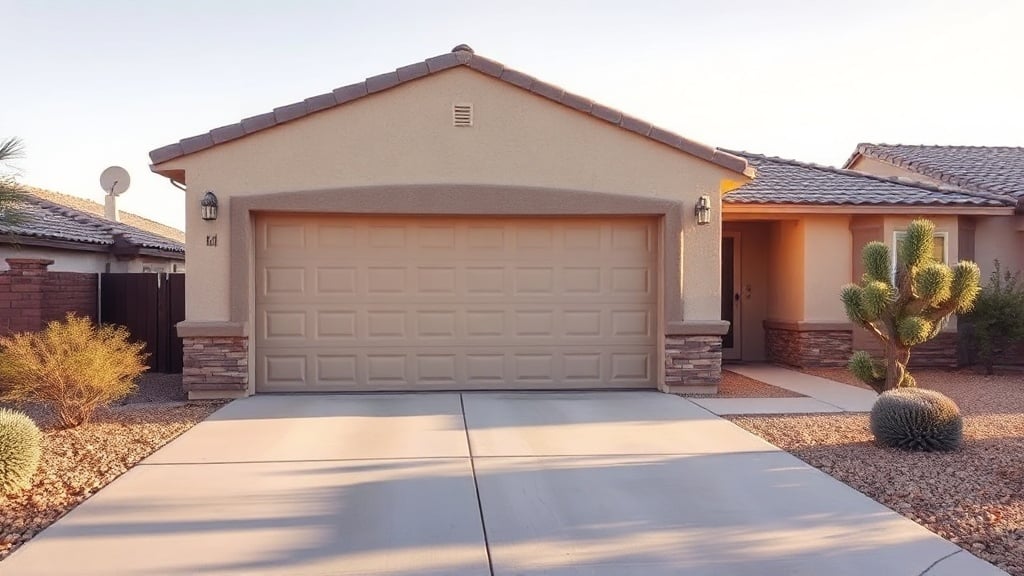
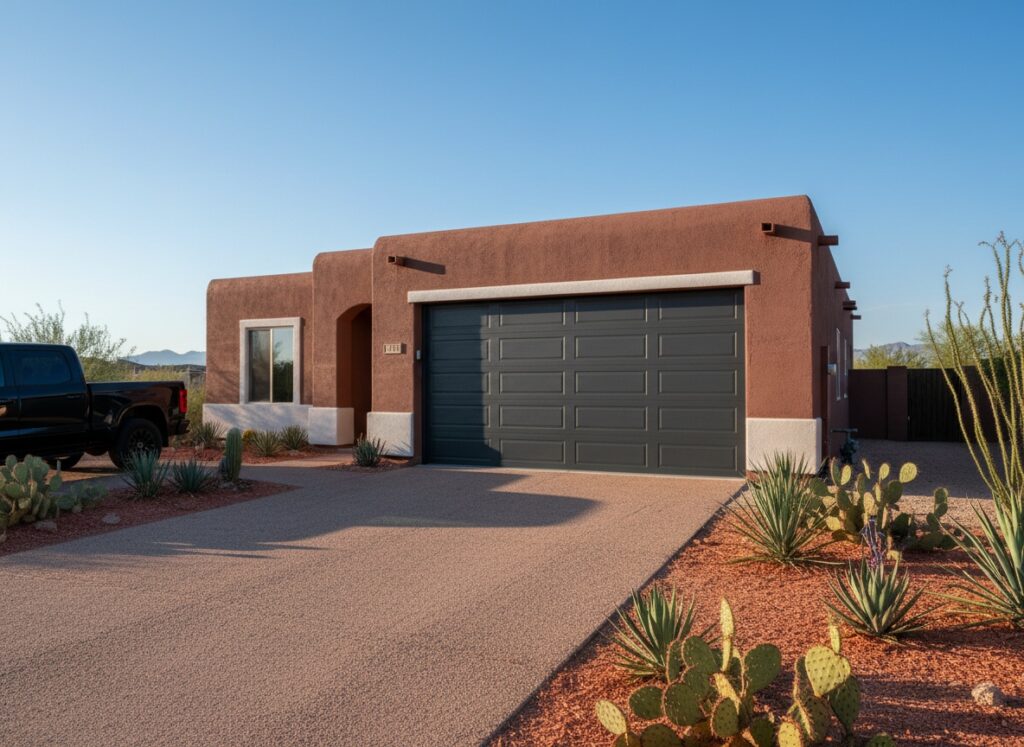
Hey, I’m Chris — and if you’ve lived in the Phoenix metro long enough, you already know our weather doesn’t mess around. Triple-digit summers, haboobs rolling in off the desert, and humidity spikes during monsoon season — it’s a lot for any mechanical system to handle, and your garage door is no exception. That’s why Garage Door Installation and ongoing maintenance here in Scottsdale isn’t the same conversation you’d have with a homeowner in, say, Ohio. We deal with extremes. And those extremes have real consequences for the door you open and close dozens of times a week.
What Phoenix-Area Weather Actually Does to Your Garage Door
Let’s break it down by season, because each one brings its own flavor of punishment — especially if you’re in Scottsdale, Chandler, Cave Creek, or Fountain Hills, where temperature swings and dust exposure can be even more intense than in the city core.
Summer Heat (May – September)

Sustained heat above 110°F does a few things: it dries out the lubrication in your springs and rollers faster than anywhere else in the country, causes metal components to expand slightly (which creates binding and grinding), and degrades rubber weather seals until they crack and gap. If your door is suddenly slower, louder, or struggling to seal at the bottom, summer heat is usually the first suspect.
Monsoon Season (July – September)
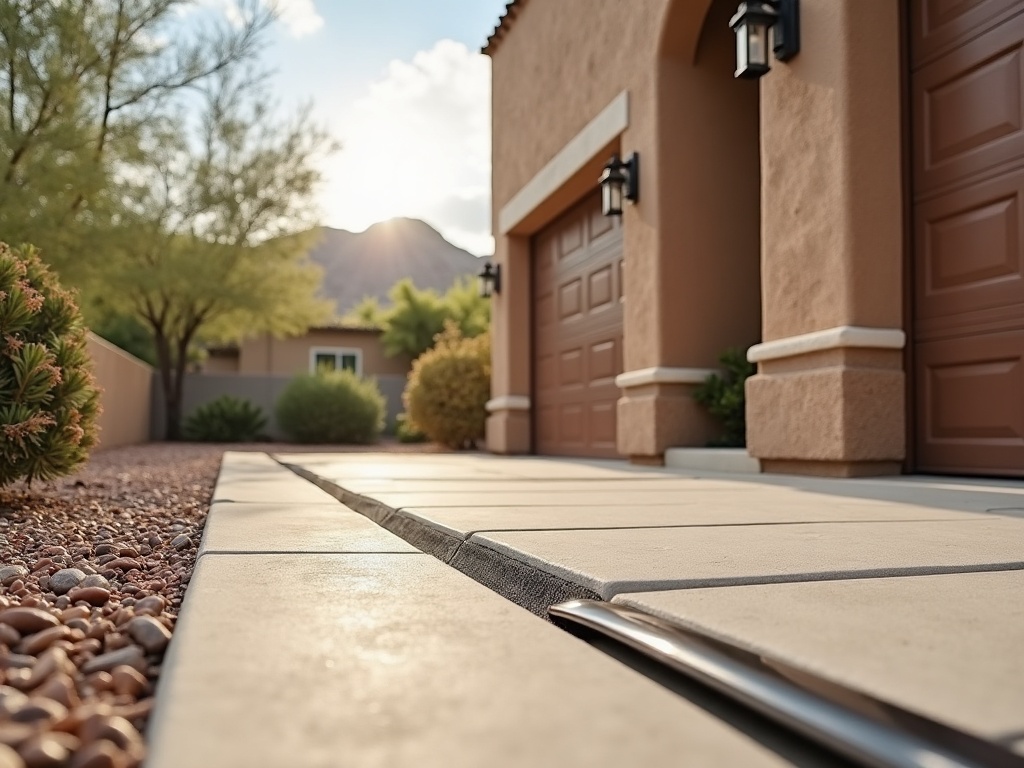
The moisture swing during monsoon season is dramatic. After months of near-zero humidity, the air turns sticky almost overnight. Wooden door panels absorb that moisture and swell. Tracks can shift slightly. And if your door isn’t properly sealed — something we see constantly out near the 101 corridor in Scottsdale and along Scottsdale Road toward Fountain Hills — water intrusion can damage both the door and the garage floor below.
Haboob Season (Anytime, Really)
Anyone who’s watched a wall of dust swallow Kierland Commons in Scottsdale in under three minutes knows exactly what a haboob does. That fine particulate matter infiltrates everything — including your garage door tracks, rollers, and opener sensors. When sensors get coated in dust, you’ll start seeing the door reverse unexpectedly or refuse to close. We hear this complaint constantly in North Scottsdale and Cave Creek.
Winter Nights
Yes, Phoenix gets cold. Not Minnesota cold — but enough that temperatures in Cave Creek and Fountain Hills can dip below freezing in January. That overnight cold tightens springs and stiffens lubrication, which is one reason doors can feel sluggish or make that low groan on early mornings. If you’ve ever had a garage door that won’t close at night, a cold snap is often part of the story.
“In the Phoenix metro, the enemy isn’t just one season — it’s the swing between them. A door that’s properly set up for our climate will outlast one that isn’t by years.”
The Real Cost of Ignoring Weather-Related Wear
Here’s what we see when homeowners put off maintenance too long: small problems become expensive ones. A dried-out spring that could’ve been lubricated for a service call turns into a snapped spring — which is a safety event, not just an inconvenience. A cracked weather seal that costs almost nothing to replace turns into water damage on a finished garage floor. This is exactly why routine garage door maintenance isn’t something we recommend just to sell a service call — it genuinely saves money over time, especially in a climate as hard on hardware as ours.
| Weather Stress | Component Most at Risk | Warning Sign |
|---|---|---|
| Extreme heat | Springs, rollers, seals | Grinding, slow movement, cracked bottom seal |
| Monsoon humidity | Wood panels, tracks | Sticking, warping, water pooling inside |
| Dust / haboobs | Sensors, tracks, opener | Random reversal, door won’t close |
| Cold winter nights | Springs, opener motor | Sluggish start, low groaning sound |
Garage Door Installation: Why Climate Should Inform the Decision
If you’re considering a new door — whether it’s for curb appeal, an aging door that’s costing you repairs, or an HOA requirement in a community like DC Ranch in Scottsdale or Seville in Gilbert — the weather here should shape every spec you choose. Insulation rating matters. Material choice matters. Spring tension matters. These aren’t just catalog checkboxes; they’re the difference between a door that thrives here and one that struggles from year one.
We walk every customer through these choices on our garage door installation service page, and we’re happy to answer questions by phone before you ever book anything. There’s no pressure — we’d rather you feel confident in the decision than rush it.
One thing that often surprises homeowners: insulation isn’t just for cold climates. In a Phoenix summer, an insulated door keeps radiant heat from turning your garage into an oven — which matters a lot if your garage is attached or if you use that space for anything beyond parking. For a deeper look, check out the garage door insulation benefits most Scottsdale homeowners overlook. It’s worth the read before you commit to any new door.
What You Can Do Right Now (And What You Shouldn’t)
There are a few things any homeowner can safely do to stay ahead of weather-related issues — and a few things that should always go to a professional. Here’s a quick breakdown:
- Safe for homeowners: Visually inspect weather seals for cracking or gaps, wipe down sensor eyes with a soft dry cloth after a dust storm, listen for new noises after a temperature swing, and test the door’s auto-reverse function monthly.
- Leave to the pros: Spring adjustment or replacement (these are under extreme tension — a snap can cause serious injury), cable work, track realignment, and opener motor servicing. If you’re in Chandler or Fountain Hills and looking up garage door service near me, call us — we cover the whole Phoenix metro and we can usually get out same day.
For a reference point on what a professional inspection covers, the National Safety Council consistently lists garage doors among the top household injury sources when improperly serviced — which is a sobering reminder that this isn’t the place to cut corners.
Signs It’s Time to Call Garage Door Experts — Not Just Watch It for Another Week
- The door reverses mid-travel with no obvious obstruction (almost always sensor-related after a haboob).
- You hear a loud bang from the ceiling of your garage — that’s often a spring failure, and the door needs to stay closed until it’s addressed.
- The door sags on one side or the panels have visible gaps when closed.
- Your opener is running but the door barely moves — the motor is fighting worn hardware.
- The door is more than 15 years old and hasn’t had a professional inspection in the last two years.
Any of these happening? Don’t wait. Our garage door repair team handles these calls across Scottsdale, Chandler, Cave Creek, Fountain Hills, and the broader Phoenix metro — and we don’t believe in surprise pricing. You’ll know what it costs before we start.
And if it’s the opener giving you grief specifically — especially those random no-close moments that drive you crazy — our garage door opener service can sort that out quickly, usually in a single visit.
We’re Local — and That Actually Matters Here
We’re Red Crest Garage Doors, and we’re not a national chain dispatching a stranger from three states away. We live and work in this metro. We know what a June in Scottsdale does to a torsion spring. We know the dust off the 51 is different from a haboob rolling in from the west valley. When you search garage door maintenance near me and you’re sitting in your driveway in Cave Creek or North Scottsdale wondering if your car is stuck inside tonight — that’s exactly the call we want to take.
Check our service area coverage to confirm we reach your neighborhood, or just call us directly. We’ll be straight with you about what’s going on, what it’ll take to fix it, and what it’ll cost.
— Chris, Red Crest Garage Doors
Some content on this site is AI-assisted and may not reflect exact current details — please verify with Red Crest Garage Doors at (602) 898-8558. Learn more.