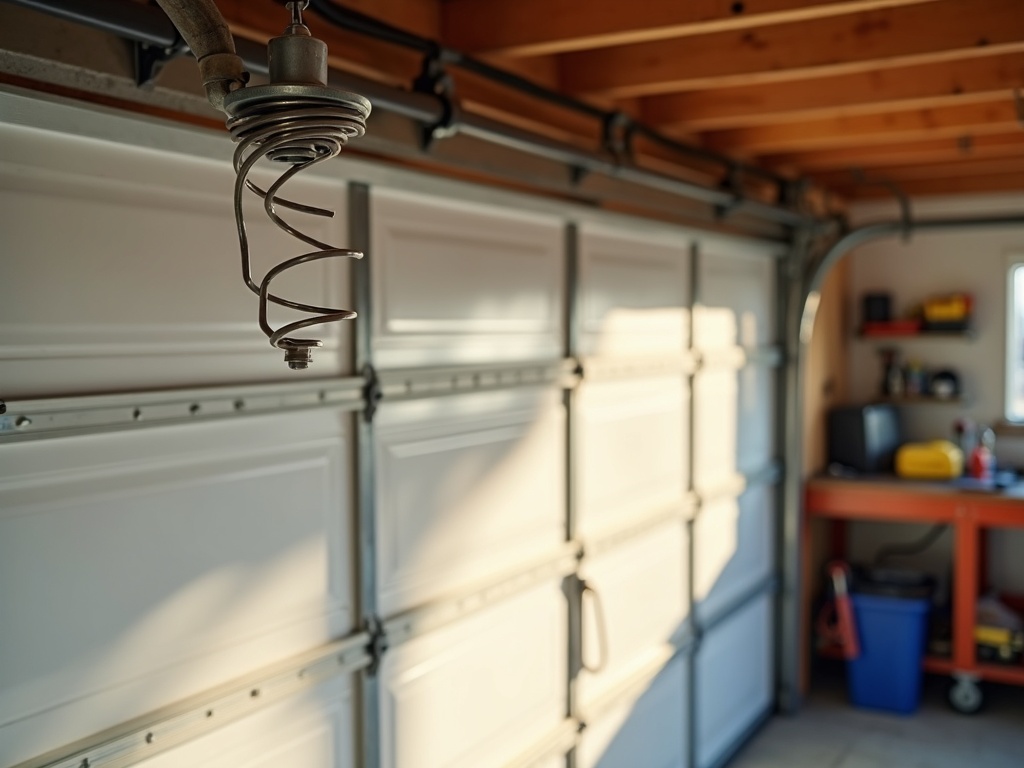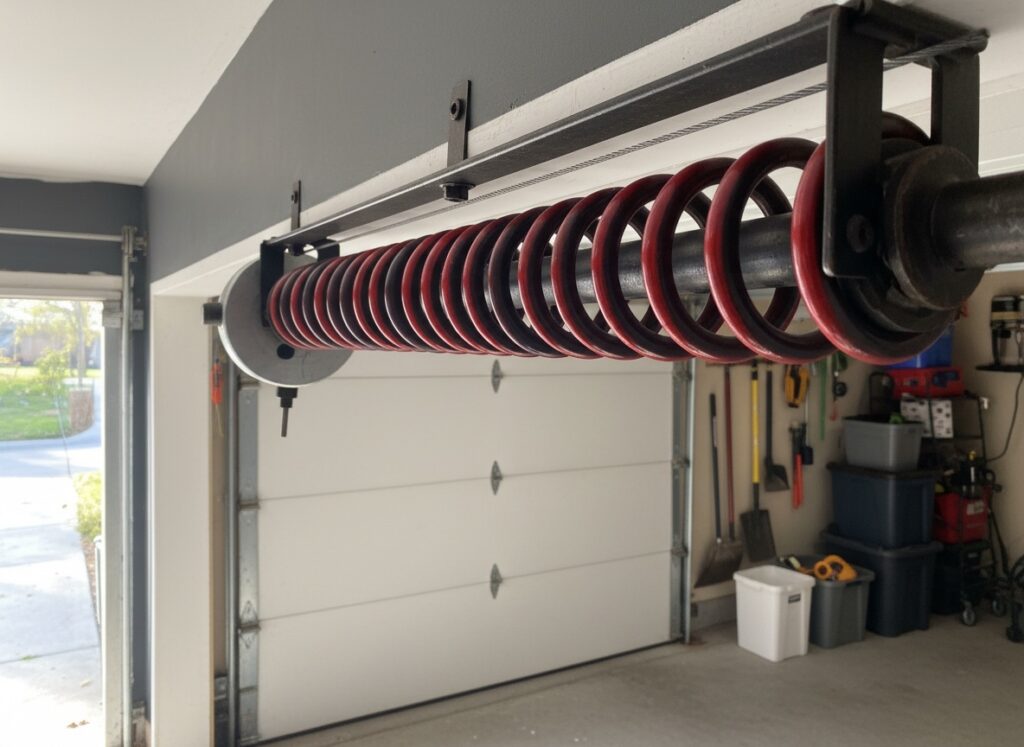

Hey, I’m Chris — and if you’ve landed here, there’s a good chance your garage door has been acting a little off lately. Maybe it jerks on one side, groans louder than it used to, or hesitates before it finally decides to move. That’s not just annoying. That’s your door sending you a signal. At Red Crest Garage Doors, we see this pattern constantly across Carefree, AZ and the surrounding Phoenix metro — and the homeowners who catch it early almost always avoid a much bigger, more expensive problem. If you’ve been searching for Garage Door Maintenance Near Me, you’re in exactly the right place.
Uneven Movement Is Never “Just How It Is”
We hear this a lot: “Oh, it’s always done that.” But a garage door that travels unevenly — dipping on the left, lagging on the right, or shuddering in the middle of its path — is not a quirk. It’s a symptom. And in our experience serving neighborhoods from Chandler all the way up through Cave Creek and Fountain Hills, the symptom almost always points to one of a handful of real mechanical issues.
Left unchecked, uneven movement puts asymmetrical stress on the entire system: the cables, the torsion spring, the rollers, the tracks, and even the opener motor. What starts as a wobble can become a snapped cable or a broken spring — and that’s when things get genuinely dangerous and genuinely expensive.
The Most Common Culprits Behind an Uneven Garage Door
When our technicians roll up to a home near McCormick Ranch in Scottsdale or out by the Tatum Ranch corridor in Cave Creek, these are the issues we find most often behind that uneven motion:
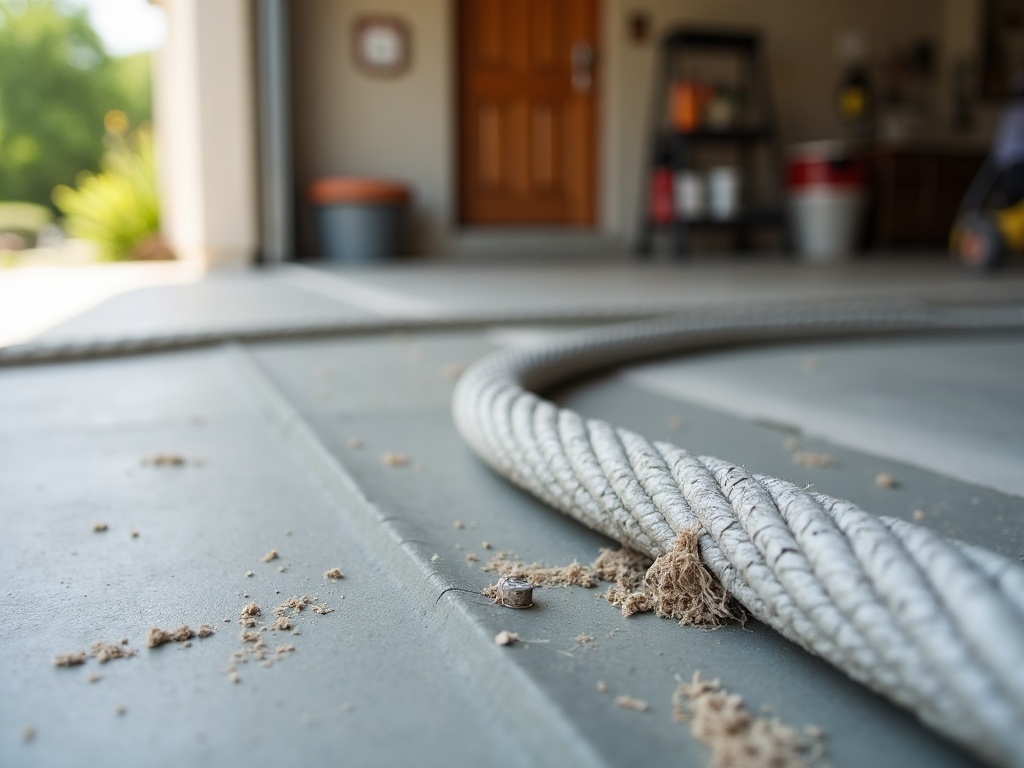
- Worn or fraying cables — Cables on one side stretch or wear faster, pulling the door off-balance. Once a cable frays, it can snap without warning.
- Spring tension imbalance — Torsion springs are calibrated to your door’s exact weight. If one side loses tension, the door tilts as it lifts.
- Bent or misaligned tracks — Even a small bend in a track (from a car bump, heat expansion, or just age) makes the rollers bind and skip.
- Worn rollers — Nylon or steel rollers that are cracked, flat-spotted, or dry cause the door to drag and jerk.
- Loose hardware — Brackets, hinges, and bolts vibrate loose over time, especially in our Arizona heat cycles.
- Opener force misadjustment — When the opener is pushing harder on one side than the mechanical resistance allows, the door strains to compensate.
A garage door that moves unevenly is not a cosmetic issue — it’s a structural one. Catch it before it becomes a safety hazard or a same-day emergency call.
Repair vs. Replacement: How to Know Which One You Actually Need
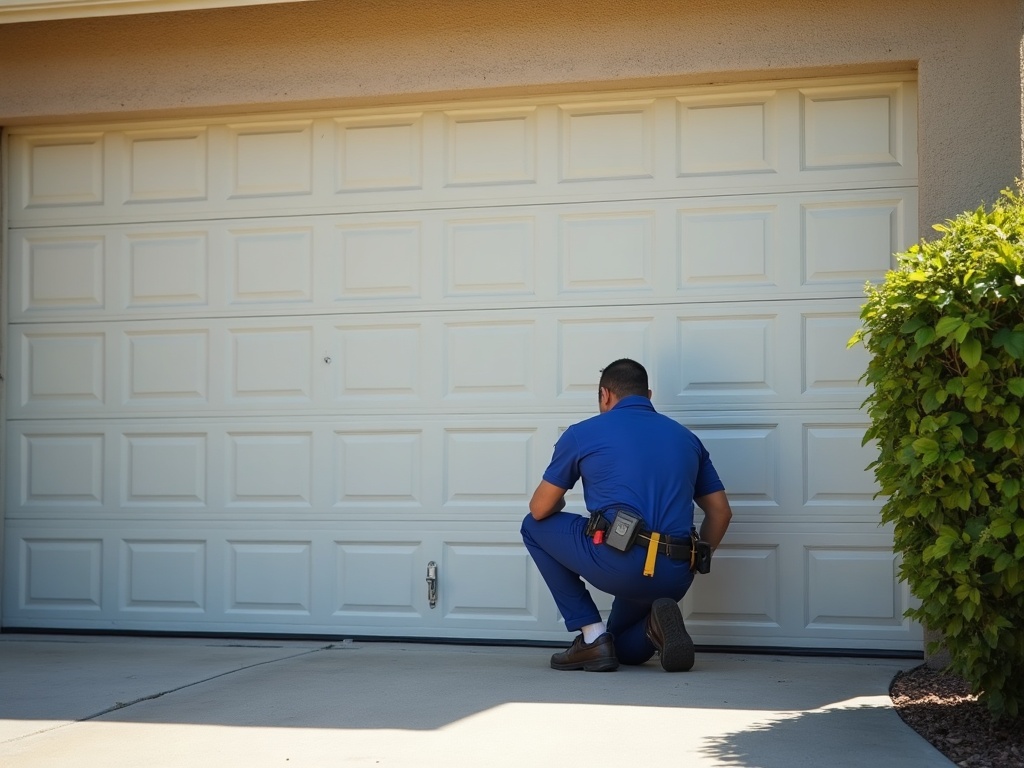
This is the question we get most: “Do I need to fix it, or is it time for a new door?” Honest answer — it depends on the age of the door, the extent of the damage, and whether you’re dealing with a single component failure or systemic wear. Here’s a simple way to think about it:
| Situation | Likely Solution | Urgency |
|---|---|---|
| One worn cable or roller | Targeted garage door repair | Soon — within days |
| Spring tension imbalance | Spring adjustment or replacement | High — don’t DIY |
| Bent track, minor | Track realignment | Moderate |
| Door 15+ years old, multiple issues | Garage door replacement | Plan now, act soon |
| Opener straining against door weight | Opener service + door tune-up | Moderate-High |
| Structural panel damage | Replacement — panels affect balance | High |
If your door is older than 12–15 years and showing multiple warning signs, garage door replacement often makes more financial sense than stacking repairs. A new door also adds real curb appeal — which matters a lot if you’re in an HOA community near DC Ranch in Scottsdale or prepping to sell in a competitive Chandler neighborhood.
Why Garage Door Maintenance Near Me Matters More in Phoenix Than You’d Think
Here in the Valley, our climate is not kind to garage doors. The combination of intense UV exposure, temperatures that regularly top 110°F, and the grit that blows in during monsoon season accelerates wear on every moving part — faster than you’d see in most other states. Metal expands and contracts dramatically between our summer highs and winter nights. Lubricant breaks down quicker. Tracks warp. Rollers crack.
That’s why committing to routine garage door maintenance on a regular schedule isn’t optional here — it’s genuinely protective. Homeowners who get their system serviced once or twice a year consistently avoid the emergency calls that happen when a door fails completely on a Tuesday morning with the car trapped inside. And if you’ve ever been stuck like that, you know how stressful it is.
We also wrote about a closely related scenario — when doors act up at night — in our post on what it means when your garage door won’t close at night and when to call a pro. Worth a read if your door is being selective about when it cooperates.
What a Professional Inspection Actually Covers
When one of our techs visits your home — whether you’re near Old Town Scottsdale or out in Fountain Hills — here’s what a proper inspection includes. According to the Door and Access Systems Manufacturers Association (DASMA), a complete annual check should cover all major mechanical and safety systems:
- Spring tension check and lubrication
- Cable inspection for fraying, kinks, or slack
- Track alignment and roller condition
- Hardware tightening — hinges, brackets, fasteners
- Balance test (manual disconnect and lift test)
- Auto-reverse safety feature test
- Opener force and travel limit adjustment
- Weather seal inspection
That’s not a 10-minute walk-around. It’s a real, methodical process — and it’s how we find the small issues before they become the expensive ones. Our garage door inspection checklist for long-term performance goes deeper into exactly what to look for at each stage.
The Warning Signs You Should Never Ignore
Beyond uneven movement, here are the red flags that tell us a door is close to a full breakdown. If you’re experiencing more than one of these, it’s time to call — not next week, now.
- Grinding, popping, or scraping sounds during operation
- The door reverses on its own without hitting anything
- One side of the door is visibly lower than the other when closed
- The opener runs but the door doesn’t move (or barely moves)
- Cables appear slack, kinked, or have visible fraying
- The door falls faster than it should when you manually disconnect the opener
- Gaps along the bottom seal — especially after a monsoon
Springs and cables under full tension store an enormous amount of energy. We strongly advise against any DIY work on those components. It’s one area where the risk is simply not worth it — and we say that as people who genuinely want you to feel empowered as a homeowner, not dependent on us for everything.
We Serve the Whole Phoenix Metro — Same Day, No Runaround
At Red Crest Garage Doors, we cover Carefree, AZ and communities throughout AZ — from Chandler and Tempe in the south to Cave Creek, Carefree, and Fountain Hills in the north. If you’re near the 101 in Scottsdale, off Shea Boulevard, or out past Pima Road, we know your neighborhood and we can usually get to you the same day.
We give you a real price before we touch anything. No surprise fees, no pressure tactics. Just honest work from people who actually know garage doors inside and out. You can also check our service area page to confirm we cover your zip code — or just call us directly.
Don’t let an uneven door turn into a broken one. Give us a call and let’s take a look — because a smooth, quiet, reliable garage door is absolutely within reach. — Chris
Some content on this site is AI-assisted and may not reflect exact current details — please verify with Red Crest Garage Doors at (602) 898-8558. Learn more.